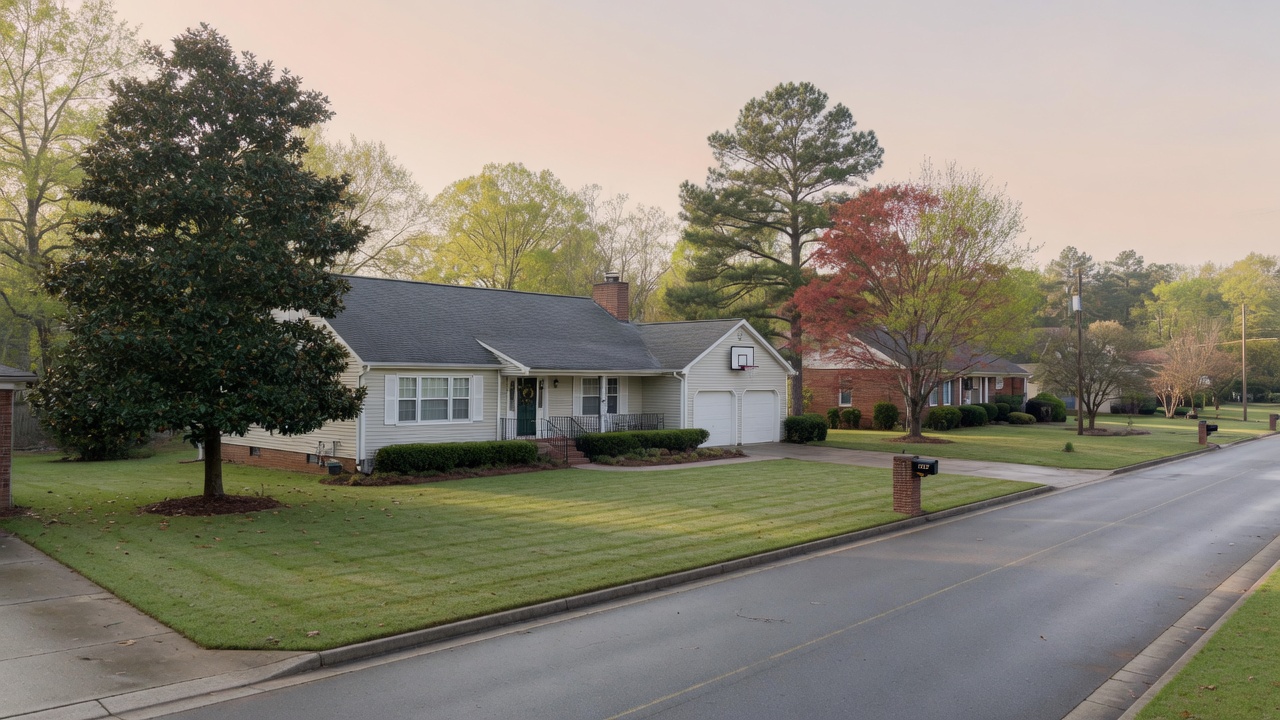
How the homeowners insurance claims process works for Cary and Wake County residents
How the homeowners insurance claims process works for Cary and Wake County residents
If your home has damage and you need to file a homeowners insurance claim, the process usually follows a predictable path: you document the damage, notify your insurer, meet with an adjuster, submit a proof of loss, and eventually receive a settlement based on your policy terms. But the details matter. Your deductible, whether your policy pays actual cash value or replacement cost, how well you document everything, and whether you need local permits for repairs all affect how much you actually receive and how long it takes.
This guide walks through each step, explains the variables that change the outcome, and points to North Carolina resources where you can get independent help. It is written for Cary, Apex, Morrisville, and other Wake County homeowners who want to understand the process before or after damage occurs, especially if you are living on a fixed income and need to plan around deductibles and cash flow.
CaryFixedIncome.com is an educational resource, not an insurance company, claims adjuster, or law firm. Every policy is different. Use this as a starting point, then verify the specifics with your insurer or a licensed professional.
What triggers a homeowners insurance claim
A homeowners insurance claim starts when your home or personal property suffers damage from a covered event. Common covered events under most standard North Carolina homeowners policies include:
- Wind and hail damage (roof, siding, windows)
- Fire and smoke damage
- Water damage from sudden, accidental sources like a burst pipe
- Theft or vandalism
- Falling objects, such as tree limbs
- Weight of ice, snow, or sleet
What most standard policies do not cover is just as important. Flood damage from rising water is almost always excluded from standard homeowners policies. You need a separate flood insurance policy, usually through the National Flood Insurance Program (NFIP) or a private carrier. If you live near a creek or in a low-lying part of Wake County, this distinction matters. We cover flood insurance basics for Cary and Wake County homeowners on a fixed income in a separate guide.
Before you file, check your declarations page (the summary page at the front of your policy) to confirm the type of loss is covered. If you are unsure, call your agent or insurer and ask directly.
Step-by-step process once you file
Once damage occurs and you decide to file, here is the general sequence. Your policy and insurer may handle some details differently.
1. Secure the property and prevent further damage
Most policies require you to take reasonable steps to prevent additional damage after a loss. That might mean tarping a damaged roof, boarding up broken windows, or shutting off a water source. Keep receipts for any emergency repairs. Insurers typically reimburse these costs as part of the claim, but only if you document the spending.
2. Document everything before cleanup
Take photos and video of all damaged areas and items before you move or clean anything. Capture wide shots of rooms and close-ups of specific damage. Walk through each room and narrate what you see if you are recording video. This evidence is one of the most important parts of the process.
3. Notify your insurer or agent
Contact your insurance company or agent as soon as practical. You will need your policy number and a summary of what happened. Most companies have a claims hotline available around the clock. Ask for a claim number and write it down. Under North Carolina regulations, the insurer must acknowledge your claim within 30 days of receiving sufficient notice, according to the NC Department of Insurance.
4. Adjuster inspection
The insurer will likely assign an adjuster to inspect the damage. The adjuster may be a company employee or an independent contractor. They will assess the damage, estimate repair costs, and report back to the insurer. You can be present during the inspection and should walk the property with them, pointing out all damage you have identified. If you have contractor estimates, share those too.
5. Submit proof of loss
Many policies require a sworn proof of loss statement. This is a formal document that details the time and origin of the loss, the damaged property, its value, any liens or encumbrances, and other insurance coverage. The insurer often provides a form. Under standard North Carolina policy language, this is typically due within 60 days of the loss, though the deadline can be extended in writing. Keep copies of everything you submit.
6. Settlement offer
After the adjuster finishes and your proof of loss is on file, the insurer makes a settlement offer. This is where the valuation method in your policy (discussed below) determines the amount. Review the offer carefully. If it seems low, you can ask for a written explanation of how the amount was calculated.
7. Repairs and supplemental claims
Once you accept the settlement, repairs can begin. If contractors find additional damage during the work, you may be able to file a supplemental claim for the difference. Coordinate with your insurer before starting major repairs, and check with Cary or Wake County about permits (covered below).
8. Recoverable depreciation (if applicable)
If your policy is replacement cost but the insurer initially paid actual cash value, you may be able to recover the depreciation difference after completing repairs and submitting proof within the timeframe required by your policy. Verify the exact deadline with your insurer.
Common factors that change how much you receive
Two homeowners with identical damage can receive very different payouts. Here is why.
Actual cash value vs. replacement cost
This is the single biggest factor for most claims. The NC Department of Insurance explains the difference clearly:
- Actual cash value (ACV) pays the replacement cost minus depreciation. Depreciation reflects the age and condition of the damaged item. A 15-year-old roof with a 25-year expected life might only get 60 percent of its replacement value under ACV.
- Replacement cost value (RCV) pays the full current cost to replace or repair with similar materials, without deducting for depreciation. Many RCV policies pay the ACV amount first, then pay the remaining depreciation after you complete repairs and submit receipts. The time limit for this is specified in your policy.
Your declarations page tells you which method applies. Coverage for the dwelling structure and personal property can have different valuation methods. Personal property is often ACV by default unless you specifically added replacement cost coverage.
For fixed-income households with older homes, the ACV versus RCV difference can be thousands of dollars. If you have not reviewed your policy recently, it may be worth understanding which valuation method you have before a loss occurs.
Deductible amount
The deductible is the amount you pay out of pocket before insurance coverage applies. The specific deductible varies by policy and can differ for certain perils such as wind or hail damage.
A higher deductible generally corresponds to a lower premium, but it increases the immediate out-of-pocket cost when filing a claim.
Policy limits and endorsements
Your policy has maximum coverage amounts for the dwelling, other structures (like detached garages), personal property, and additional living expenses if you are displaced. Any damage exceeding those limits is your responsibility. Some items, like jewelry or collectibles, may have separate, lower sub-limits unless you added a specific endorsement.
Scope of damage and documentation quality
The adjuster can only assess what they can see and what you present. Thorough, organized documentation of damaged items with descriptions, purchase dates, and estimated values makes the process smoother and can result in a more complete settlement.
How deductibles and out-of-pocket costs affect fixed-income households
When you live on a fixed income, the deductible is not just a number on a policy page. It is real money that has to come from somewhere right when you are dealing with damage.
Here are a few things to think about:
- The deductible applies per claim, not per year. If you have two separate losses in the same year, you may owe the deductible twice.
- Under an ACV policy, the settlement on an older home with older belongings may be significantly less than the cost of full repairs. The difference between what the insurer pays and what repairs actually cost comes out of your pocket.
- Under an RCV policy, you may need to front the cost of repairs before receiving the depreciation supplement. On a tight budget, this timing gap can strain cash flow.
- Additional living expenses (coverage for a hotel or rental if your home is uninhabitable) may be subject to limits and require coordination with the insurer.
None of this means filing a claim is the wrong move. It means the financial picture is more complicated than just the damage itself, and it is worth understanding the out-of-pocket exposure before or early in the process.
Documentation and evidence that helps the process
Good documentation speeds up the claim and supports a more complete settlement. Here is a practical checklist of what to gather and prepare:
- Your policy declarations page showing coverages, deductibles, and valuation method
- Photos and video of all damage taken before any cleanup or repairs
- A written inventory of damaged items with descriptions, approximate purchase dates, original cost, and estimated replacement cost
- Receipts or proof of ownership if available (old photos, credit card statements, appliance manuals with model numbers)
- Repair estimates from licensed contractors if you have them
- Receipts for emergency repairs you made to prevent further damage
- Any police or fire reports if applicable
- The sworn proof of loss form from your insurer, completed carefully
You do not need to have every receipt for every item. But the more detail you provide, the less back-and-forth with the adjuster. A phone photo inventory recorded room by room is far better than nothing, and it costs nothing but time.
One habit that helps: keep a running home inventory on your phone or computer. Update it once a year. It feels tedious until you need it, and then it is the most useful document you have.
What can delay or complicate a claim in the Triangle area
Claims in the Cary and greater Triangle area face some predictable friction points:
- Storm volume. After a major wind, hail, or hurricane event, insurers receive a surge of claims across the region. Adjusters get backed up. The NC Department of Insurance acknowledges this and asks for patience, but it can mean weeks of waiting for an inspection.
- Complex or hidden damage. Water damage behind walls, foundation issues, or roof damage that only shows up after the first subsequent rainstorm can lead to supplemental claims and longer timelines.
- Scope and valuation disputes. If your contractor's estimate is significantly higher than the adjuster's, the insurer may need to reinspect, or you may need to go through an appraisal process outlined in your policy.
- Permitting and inspection backlogs. After widespread storm damage, local building departments can also get busy. We discuss this in more detail below.
- Documentation gaps. Claims where the homeowner cannot show proof of what they owned or what condition items were in before the loss tend to take longer and settle for less.
North Carolina does not have a hard deadline for full claim settlement. The requirement is that insurers handle claims in a "reasonably prompt" manner. If your claim feels stalled, the NC Department of Insurance consumer services line is one place to start.
How a claim can affect future premiums and coverage
This is a question that comes up a lot, and the honest answer is: it depends.
Filing a homeowners insurance claim may affect your future premiums, but the impact varies by insurer, the type and size of the claim, and your claims history. A single small claim on an otherwise clean record may have little or no effect. A large claim or multiple claims in a short period can lead to higher premiums at renewal or, in some cases, non-renewal of the policy.
Some insurers offer a "claims-free" discount that disappears after you file. Others have internal thresholds based on claim size or frequency.
Whether filing a claim affects future premiums depends on the insurer, the type and size of the claim, your claims history, and other factors. Understanding these factors can help you prepare. Ask your agent or insurer how a claim might affect your future premiums.
If you want to understand more about how insurance fits into your overall housing costs, our guide to homeowner insurance on a fixed income covers the broader picture.
Questions to ask your insurer and where to get independent help in North Carolina
When you are on the phone with your insurer or agent after a loss, here are specific questions worth asking:
- What is my claim number and who is my assigned adjuster?
- What is the expected timeline for the adjuster inspection?
- Does this claim fall under actual cash value or replacement cost for the dwelling? For personal property?
- What is my deductible for this specific type of loss?
- Is the proof of loss form you are sending, and what is the deadline to return it?
- If I find additional damage during repairs, what is the process for a supplemental claim?
- What is the deadline for recovering depreciation after repairs are complete?
- Will you coordinate payments with my mortgage lender?
If you disagree with the settlement offer or feel the process is not being handled fairly, you have options:
- NC Department of Insurance consumer services. You can call 855-408-1212 or file a complaint online through the NC DOI website. The department reviews complaints and contacts the insurer. They cannot guarantee a specific outcome, but they enforce fair claims practices under state regulations.
- Appraisal process. Most homeowners policies include an appraisal clause. If you and the insurer disagree on the amount of loss, either side can invoke appraisal. Each party hires an appraiser, and if the two appraisers disagree, an umpire makes the binding decision.
- Legal Aid of North Carolina. For qualifying individuals, Legal Aid NC may be able to help with insurance claim disputes. Their website has information on the steps for filing and appealing claims.
These are general paths, not recommendations. Which option fits depends on the specifics of your claim, your policy, and your situation.
Local resources for Cary and Wake County homeowners
Once you have a settlement and are ready to repair, local permitting enters the picture. This is a step many homeowners overlook, and it can matter for both code compliance and future insurance or sale of the home.
Building permits in Cary and Wake County
In Cary, most construction, alteration, and repair work involving structural elements, electrical systems, plumbing, or mechanical equipment requires a building permit. The Town of Cary Inspections & Permits department handles this. You can reach them by dialing 311 from within Cary or calling 919-469-4000. Many permit applications can be submitted online.
For unincorporated parts of Wake County, permits go through the Wake County Permits and Inspections department. Both offices require contractor information, including proof of licensing and workers' compensation coverage for most projects.
A few things to know:
- Minor, non-structural repairs (like replacing drywall or repainting) may not require a permit, but the line varies by scope. When in doubt, ask before starting work.
- Roofing projects that involve structural changes or certain electrical/plumbing work tied to the repair typically need permits.
- Unpermitted work can cause problems when you sell the home, and it could complicate future insurance claims.
NC Department of Insurance
The NC DOI is the primary state resource for insurance consumer questions and complaints. Their website has guides on homeowners insurance, claims handling, and how to look up licensed agents and companies. The consumer helpline is 855-408-1212.
Contractor verification
After a major storm, out-of-state contractors sometimes show up in the Triangle offering quick repairs. Before hiring anyone for insurance-related work, verify their North Carolina contractor license, ask for proof of insurance, and check references. The NC Licensing Board for General Contractors has an online lookup tool.
How to prepare before you ever need to file
Most of this guide covers what to do after damage happens. But some of the most useful steps happen before a loss:
- Review your declarations page at least once a year. Know your deductible amounts, coverage limits, and whether you have ACV or RCV on the dwelling and personal property.
- Keep a home inventory. Photograph rooms, closets, and major items. Record serial numbers and purchase dates for electronics and appliances.
- Store policy documents somewhere accessible, not just in a filing cabinet that could be damaged in the same event that damages your home. A digital copy in email or cloud storage works.
- Understand your flood risk. Standard homeowners policies do not cover flood damage. If you are in or near a flood zone, separate coverage may be worth discussing with a licensed agent.
- Know your local permit office contact. If you ever need major repairs, you will want to reach them quickly.
None of this guarantees a smooth claim. But it puts you in a much stronger position when something happens, especially if every dollar matters on a fixed budget.
This guide is educational, not a substitute for advice specific to your policy, property, or situation. If you have questions about your coverage or a claim you are dealing with, ask us a question or speak with a licensed insurance professional who can review your specific details.
You might also like