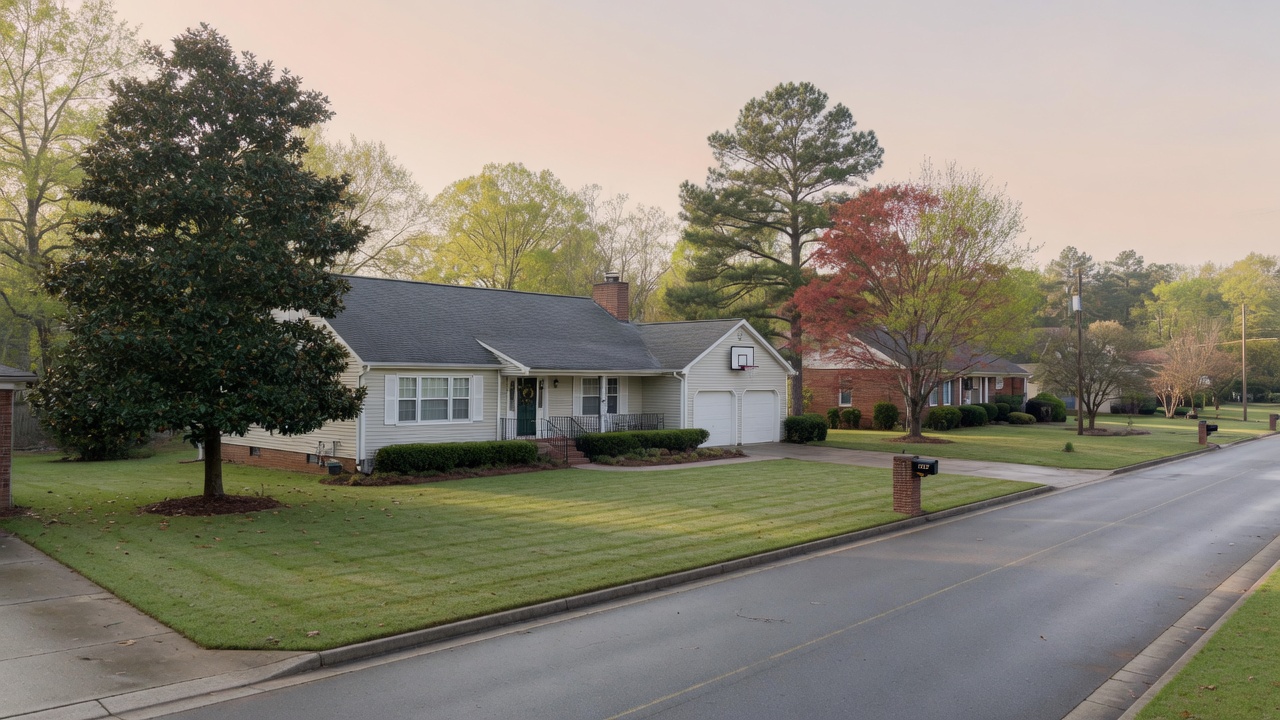
How property tax relief works for seniors and disabled residents in Wake County
How property tax relief works for seniors and disabled residents in Wake County
Keeping up with property taxes is a practical concern for many retirees in Cary, Apex, and the broader Triangle area. As home values change, the annual tax bill can become one of the largest fixed costs in a household budget. North Carolina law provides three main programs to help manage this burden for homeowners who meet certain age, disability, or veteran status requirements. These programs are administered by the Wake County Tax Administration and apply to both county taxes and municipal taxes for the Town of Cary.
The quick answer: 2026 property tax relief programs
Wake County residents generally have access to three primary programs for property tax relief:
- Elderly or Disabled Exclusion: This program reduces the taxable value of your home by $25,000 or 50 percent, whichever is greater. You do not have to pay this money back.
- Disabled Veteran Exclusion: This reduces the taxable value of a permanent residence by $45,000 for qualifying veterans or their surviving spouses. There is no income limit for this specific program.
- Circuit Breaker Property Tax Deferment: This program caps your annual property taxes at a percentage of your income. Unlike exclusions, this is a deferment. The taxes are delayed, not forgiven, and they create a lien on your property.
Each program has strict rules about residency, ownership, and income. To qualify for any of these in the 2026 tax year, you must own and occupy your home as your permanent residence by January 1, 2026.
The elderly or disabled exclusion (G.S. 105-277.1)
This is the most common relief program for seniors on a fixed income. It permanently removes a portion of your home value from the tax calculations. If you qualify, you do not repay these tax savings. This applies to your home and up to one acre of land.
Who is eligible?
To qualify for the 2026 tax year, a homeowner must meet these requirements:
- Be at least 65 years old or be totally and permanently disabled as of January 1.
- Have a total income for the 2025 calendar year that does not exceed $38,800.
- Be a North Carolina resident who owns and occupies the home as a permanent residence.
For married couples living together, the income of both spouses is counted, regardless of whose name is on the deed. Income includes almost all money received, such as Social Security benefits, pensions, interest, and wages.
The circuit breaker property tax deferment (G.S. 105-277.1B)
The circuit breaker program works differently. Instead of reducing the value of your home, it limits how much you actually pay in taxes each year to either 4 percent or 5 percent of your income. The difference between what you owe and what you pay is deferred.
This program can be helpful for residents whose home values have risen sharply while their incomes remain lower. However, there is a trade-off. The deferred taxes become a lien on your property. When a disqualifying event happens, such as selling the home or the owner passing away, the last three years of deferred taxes plus interest become due.
Eligibility and ownership rules
The circuit breaker has a higher income limit than the exclusion program, but it requires that you have owned and occupied the property for at least five full consecutive years. You must also re-apply for this program every year to remain eligible.
The disabled veteran exclusion (G.S. 105-277.1C)
This program is for veterans with a total and permanent service-connected disability or their unmarried surviving spouses. It excludes up to $45,000 of the home value from taxes. One major advantage of this program is that there is no income limit. You will need to provide certification from the Department of Veterans Affairs to verify eligibility.
Income limits and definitions for 2026
For most tax relief programs in North Carolina, income limits are adjusted annually based on the Social Security cost-of-living adjustment. For the 2026 tax year, the income limit is $38,800. This is based on your total income from the 2025 calendar year.
Wake County calculates income by looking at all sources. This includes gross Social Security, retirement distributions, and investment income. It is a good idea to have your tax returns and Social Security SSA-1099 statements ready when you begin the application process.
How to apply: deadlines and documentation
The application period for property tax relief in Wake County begins in January. The deadline to submit a timely application is June 1. If you miss this date, Wake County sometimes accepts late applications through December 31 if you can show good cause for the delay, though approval is not guaranteed for late filings.
You can find the necessary forms through the Wake County Tax Administration office. They are located at 301 S. McDowell St., Suite 3800, in Raleigh. You can also reach them by phone at 919-856-5400. Since Wake County handles the billing for the Town of Cary, you only need to file one application with the county to receive relief on both county and municipal property taxes.
Questions to ask the Wake County tax office
If you are considering an application, you might want to call the tax office with these specific questions:
- Based on my 2025 income, which program provides the most relief for my situation?
- What specific documents do I need to provide to prove a permanent disability?
- If I qualify for the exclusion, are there any circumstances where I would need to re-apply?
- What happens to my deferred taxes if I decide to move into a different residence in three years?
- Is my specific address inside the city limits of Cary or in an unincorporated area?
Understanding housing and fixed-income living means looking at all the numbers, including these tax breaks. While these programs can lower your costs, they each have nuances that a professional can help you navigate. You can also find more information on our local resource guide or use our Ask a Question page if you have a general question about how these rules work on a fixed income.
CaryFixedIncome.com is an educational resource and does not provide individualized tax, legal, or financial advice. Because tax laws and income limits change frequently, you should always verify your eligibility and the current rules with the Wake County Tax Administration before making decisions about your property taxes.
You might also like